Executive Summary
This page shows how simple machine learning models can read text and give useful signals about AI conversations. We look at three questions.
- Can we flag long comments that are more likely to be controversial
- Can we predict how many comments a new submission will receive
- Can we discover broad topic groups without labels
Logistic regression is able to separate controversial and non controversial comments with an area under the ROC curve close to 0.69. Gradient boosted trees that use both metadata and text embeddings predict comment counts with an RMSE around 0.57 on the log scale. Unsupervised clustering shows that most posts share a common vocabulary about general AI use, while a few very specific patterns form tiny separate clusters.
Task 1. Controversial Comment Classification
The first task predicts whether a long comment is marked as controversial.
We focus on comments with more than 200 characters from seven AI related
subreddits. The label comes from the Reddit field controversiality.
Model design
We balance the data to keep about one controversial comment for three non controversial ones. The model uses basic text features and simple numeric signals.
- Text is tokenized, stop words are removed, and TF IDF vectors are built
- Comment length is added as a numeric feature
- We train logistic regression and random forest classifiers with class weights
| Model | AUC ROC | AUC PR | Accuracy | F1 score |
|---|---|---|---|---|
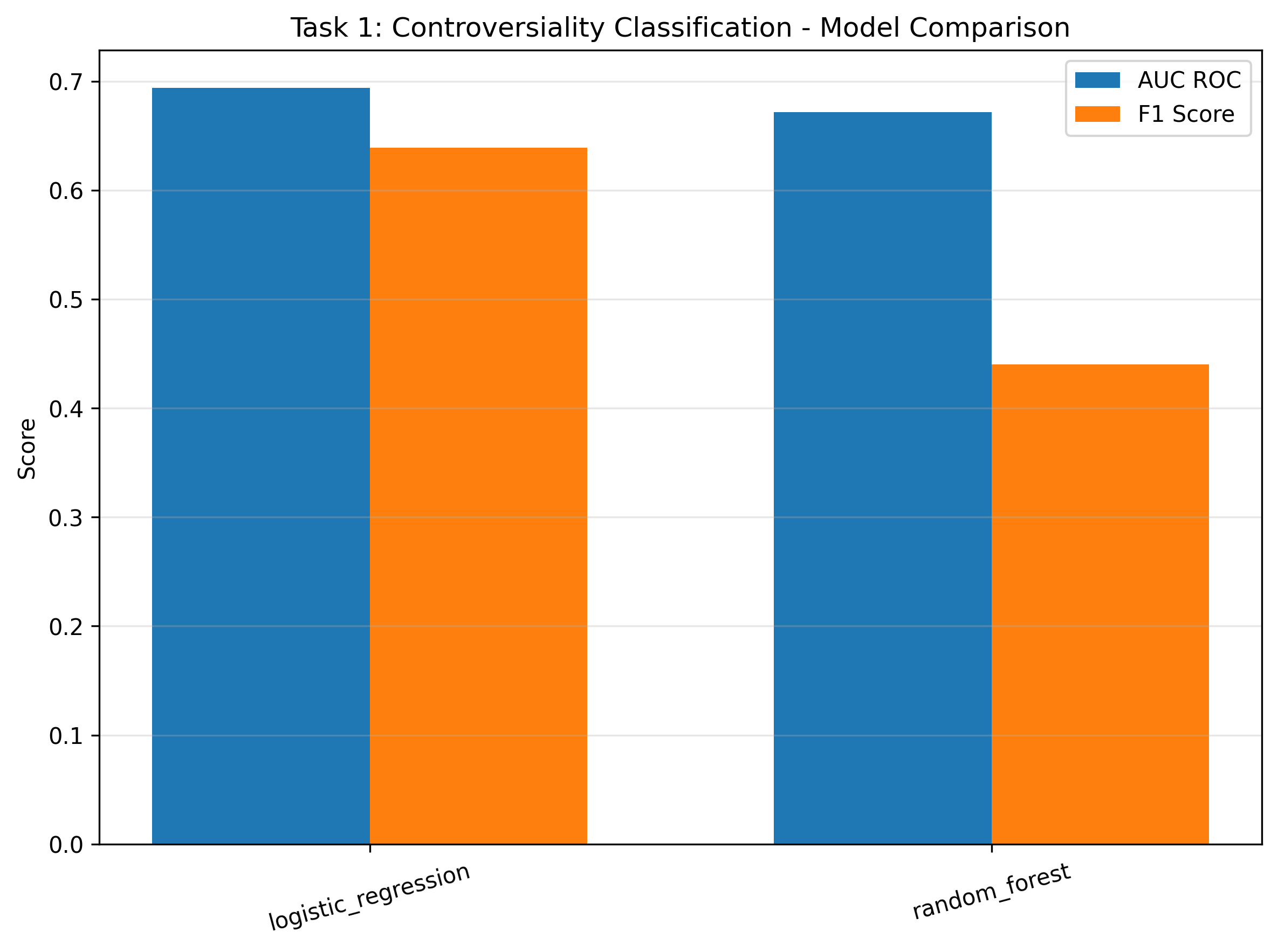
| Logistic regression | 0.694 | 0.406 | 0.614 | 0.639 |
| Random forest | 0.672 | 0.394 | 0.445 | 0.440 |
Key insights
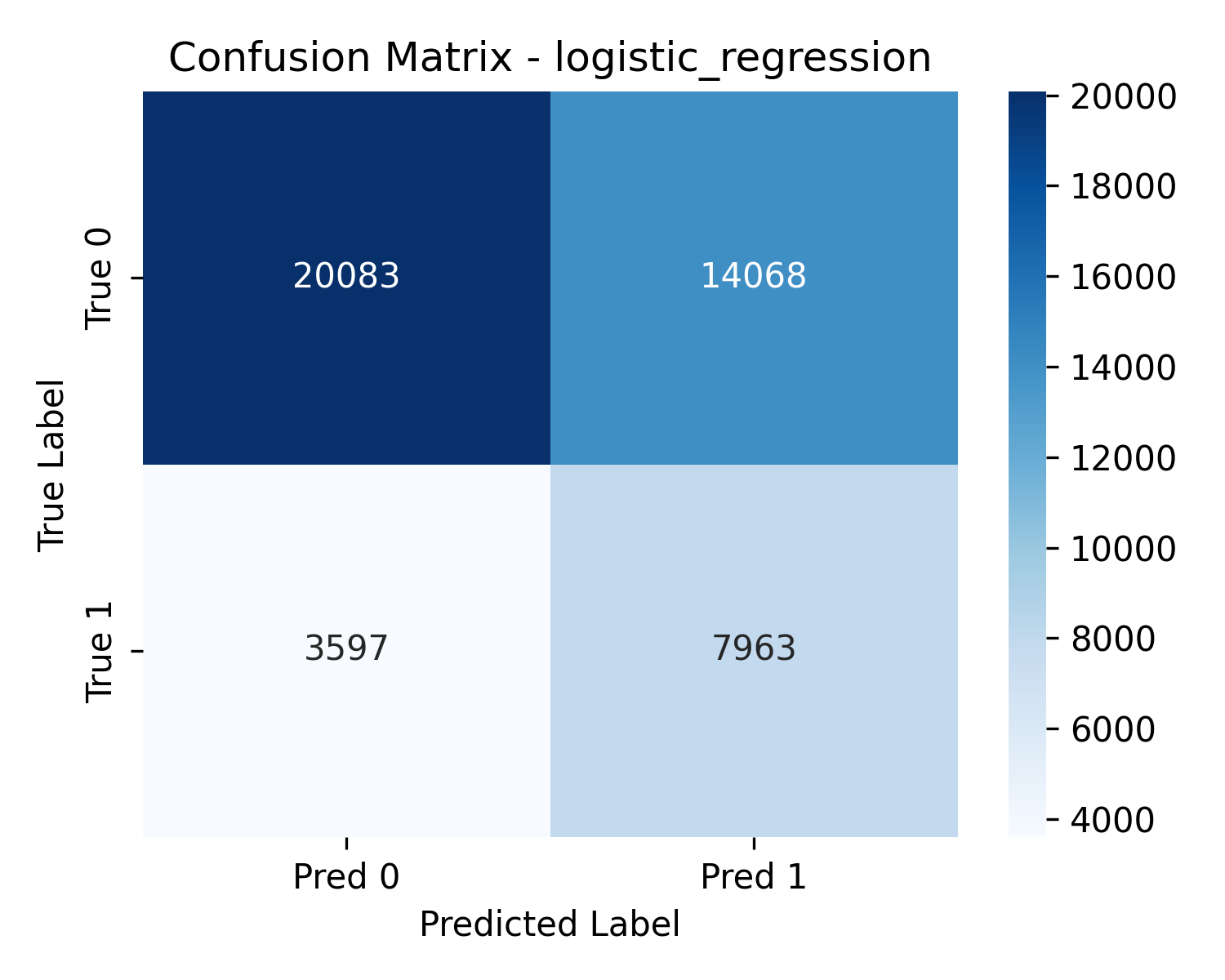
- Logistic regression gives the best balance between recall and precision. It correctly classifies about sixty three percent of controversial comments while keeping false positive errors at a moderate level.
- The random forest model is more aggressive. It catches more controversial comments but labels many neutral comments as controversial, which lowers accuracy and F1 score.
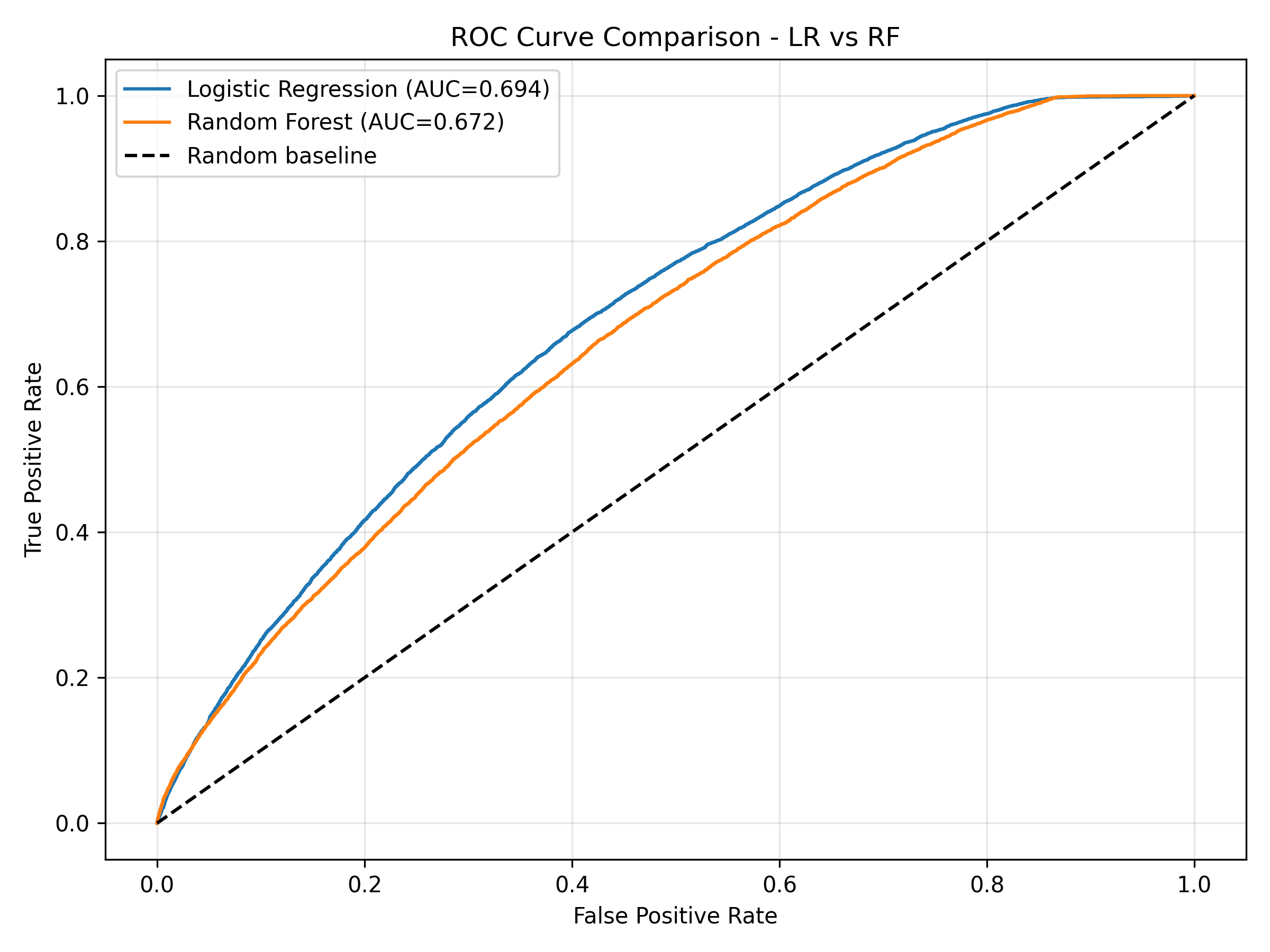
- The ROC curves show that both models are clearly better than random guessing, but gains beyond logistic regression are small. This suggests that deeper non linear structure is limited at this level of features.
Task 2. Predicting Comment Counts
The second task predicts how many comments a submission will receive. This is a proxy for community engagement or attention.
Model design
The target variable is the natural log of one plus the comment count. This reduces the effect of rare very large threads and makes the distribution closer to normal.
- Metadata features include posting time, day of week, month, title and body length, presence of external links and simple author history statistics.
- We build two text representations. One uses TF IDF on title plus self text. The other uses word vector embeddings from a Word2Vec model.
- Both text vectors are combined with metadata and used as input to gradient boosted tree regression models.
| Feature set | Best maxIter | RMSE test | MAE test | R squared test |
|---|---|---|---|---|
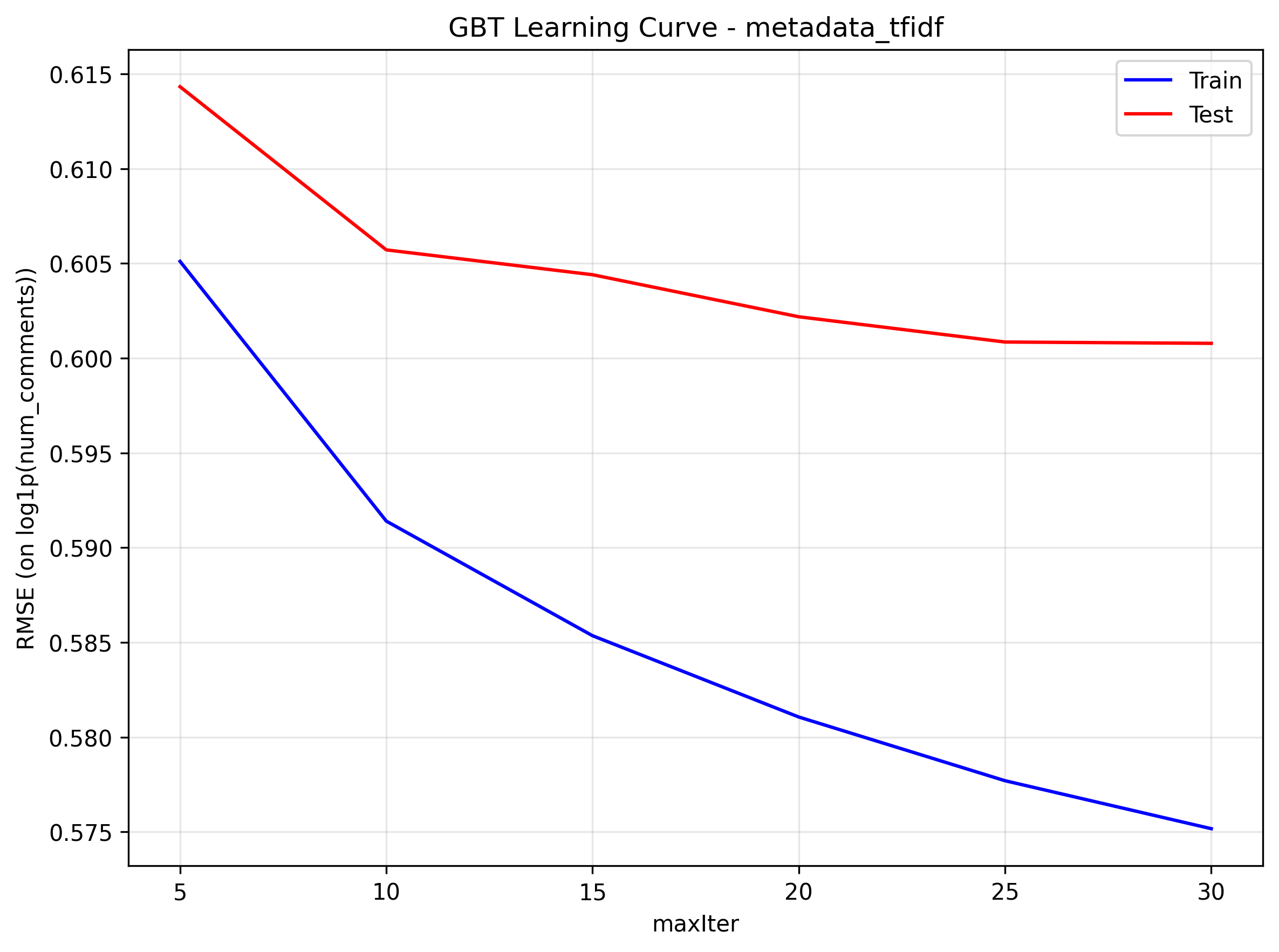
| Metadata plus TF IDF | 30 | 0.601 | 0.325 | 0.673 |
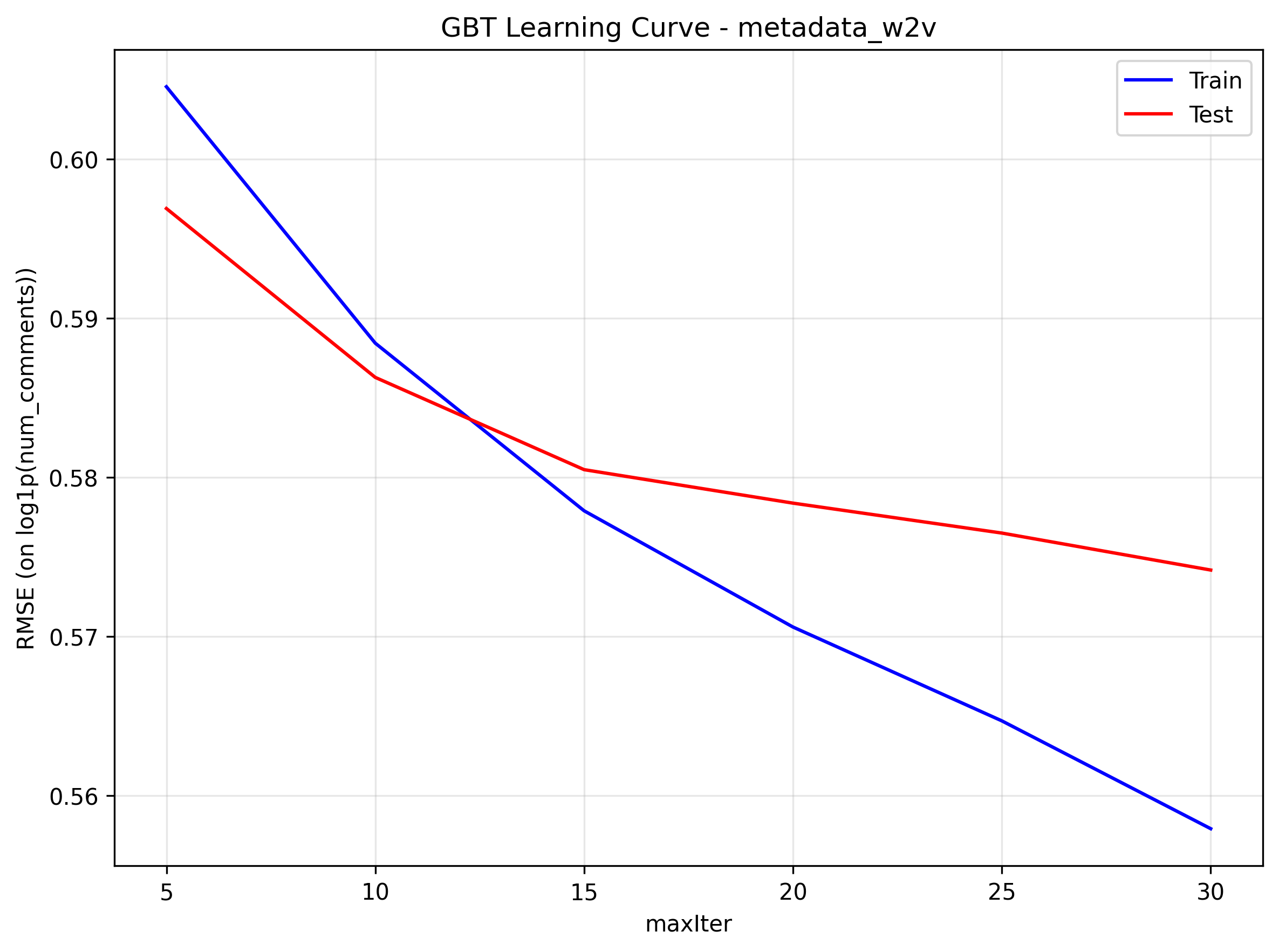
| Metadata plus Word2Vec | 30 | 0.574 | 0.313 | 0.696 |
Key insights
- Word2Vec embeddings clearly improve performance. They lower test RMSE from about 0.60 to 0.57 and raise the R squared value from about 0.67 to about 0.70.
- Both learning curves show a gentle gap between train and test error. This suggests some overfitting but not a severe one. More trees bring slow but steady gains.
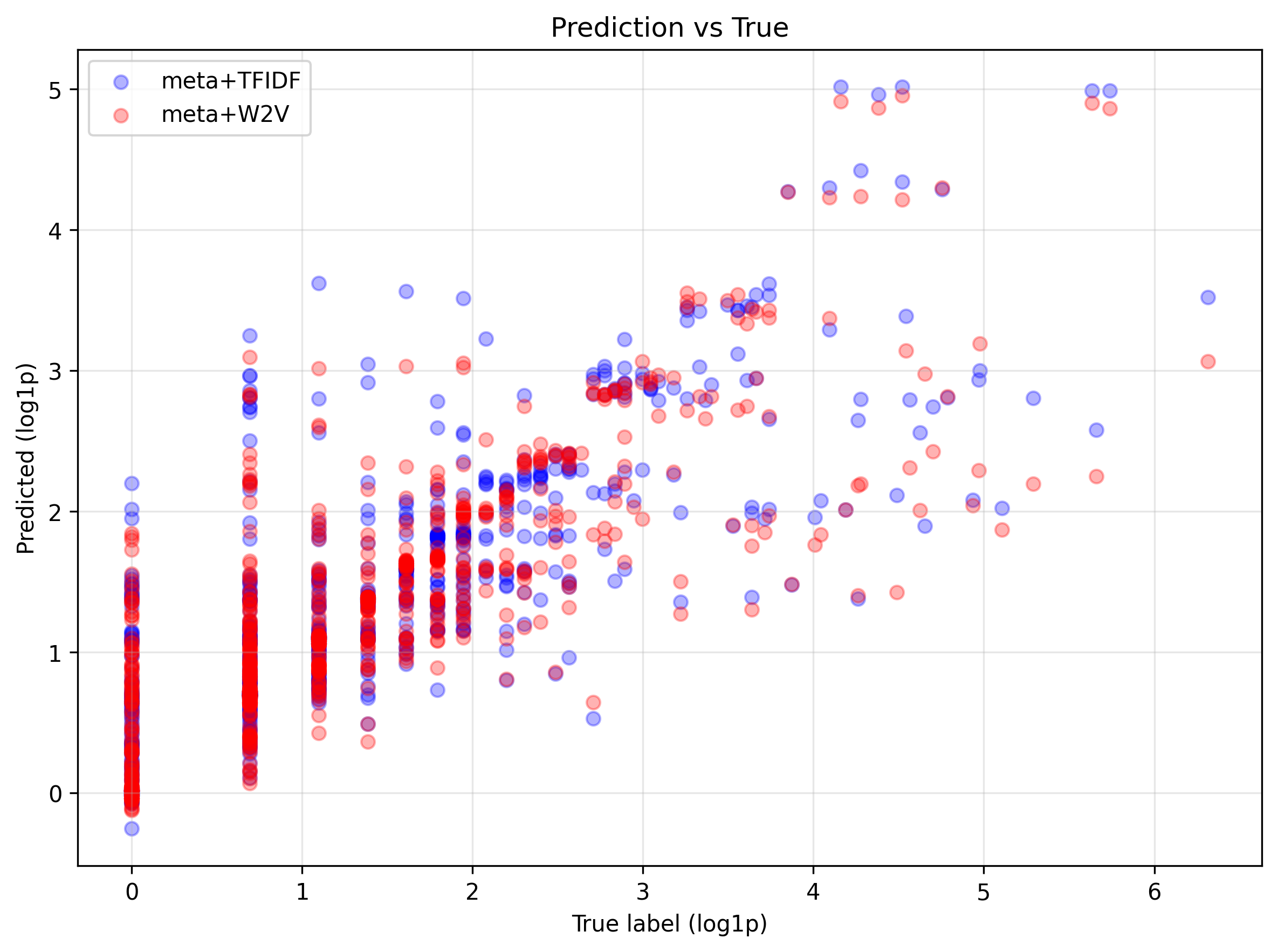
- The scatter plot shows that the model captures the broad trend in log comment counts but still underestimates the most popular threads. Extreme viral posts remain hard to predict with these features.
Task 3. Unsupervised Topic Clustering
This task explores whether simple clustering can reveal meaningful structure in AI-related submissions. We apply KMeans to TF-IDF features from the title and selftext fields.
Method
- Combine title and body text, clean and lowercase
- Build TF-IDF vectors with a large vocabulary
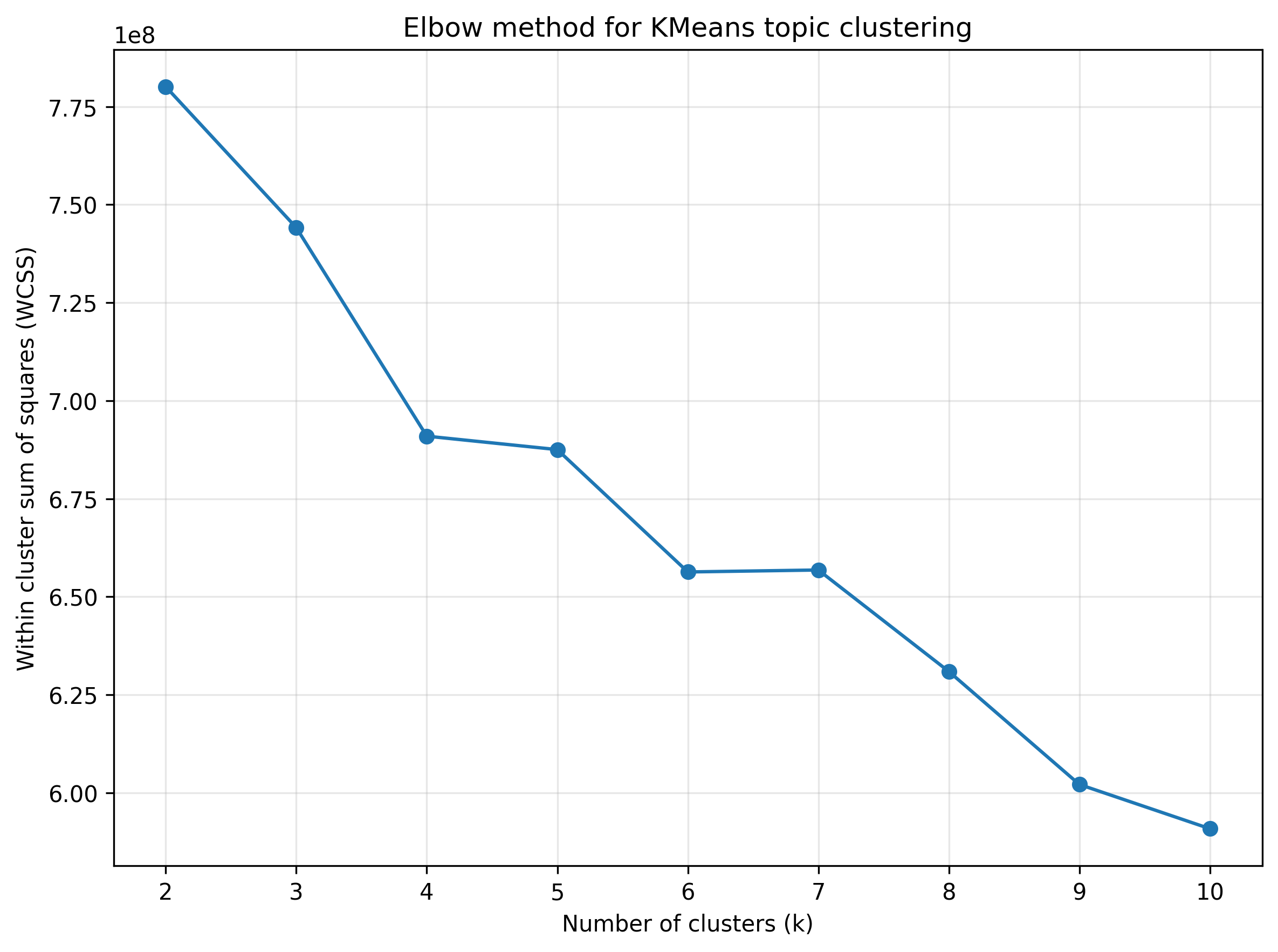
- Run KMeans for several values of K and inspect the elbow curve
- Analyze the largest clusters by top words and subreddit distribution
Representative clusters
Most submissions fall into a single broad cluster focused on general AI usage. A few very small clusters reflect highly specific and repeated patterns. Below are three representative clusters that illustrate the range of themes.
Top words:
- ai
- chatgpt
- model
- data
- use
This cluster contains nearly all submissions and reflects broad conversations about how people use AI tools and models.
Top words:
- plugin
- search
- find
- data
- ask
This tiny cluster captures a repeated plugin announcement or template. It is not a broad theme but shows how boilerplate content forms its own pattern.
Top words:
- start
- students
- learning
- appreciate
- questions
This cluster reflects an academic or classroom-focused message. Though small, it highlights a positive and learning-oriented tone.
Key insights
- The elbow curve shows only a few major directions of variation, suggesting limited natural clustering structure.
- One large cluster dominates, indicating that most posts use common vocabulary about AI and ChatGPT.
- Very small clusters often come from repeated patterns or copied templates rather than distinct conversational themes.
- Richer models or narrower subsets of posts would be needed to uncover more interpretable topics.
Technical Notes
All models run on a Spark cluster. Data is read from S3, processed in Spark DataFrames and stored again as Parquet, CSV and PNG plots.
- Task 1 uses Spark ML pipelines with tokenization, stop word removal, Hashing TF and IDF, followed by logistic regression or random forest.
- Task 2 uses gradient boosted tree regression with metadata features, TF IDF features and Word2Vec embeddings.
- Task 3 uses KMeans on TF IDF vectors and a separate step for truncated SVD to reduce dimensionality for visualization.
The corresponding Python files live under code/ml/ and write
metrics to data/csv/ and figures to data/plots/.